

Oasis soils result from the combined action of natural and anthropic processes, and thus constitute valuable systems for the understanding of human–environment trajectories over the millennia. The present research aims to develop the study of ancient oasis soils by identifying proxies to detect past agricultural practices. Ten reference pits were dug in Masafi, in both cultivated plots (irrigated plots with palm trees/fruit trees/cereals; manure/ashes/carbonates) and abandoned ones. Bulk sediment samples were analysed for geochemistry/pedo‐sedimentary studies: inductively coupled plasma‐optical emission spectrometry, loss on ignition, pH, electrical conductivity, grain size and magnetic susceptibility. This multiproxy approach enabled the creation of a soil typology of oasis agricultural modes. Irrigation and liming lead to salinisation, particularly in a B‐horizon. Manure creates a hortic horizon, enriched in P and Zn. Ashes can be detected with a simultaneous increase of magnetic and salinity values. Soils in plots with fruit trees/cereals are not distinguishable from those with palm monoculture. Weathering was identified on the basis of the enrichment in Al, Ti, K Na, Ni, Cr and Fe, whereas proxies of ancient practices seem to be preserved after 15 years of abandonment. As leaching processes appear to be limited to the first 50 cm, the durability of soil signatures depends on how they were buried.
Typologie d'actualités : Publications
Article | First 40Ar/39Ar analyses of Australasian tektites in close association with bifacially worked artifacts at Nalai site in Bose Basin, South China: The question of the early Chinese Acheulean
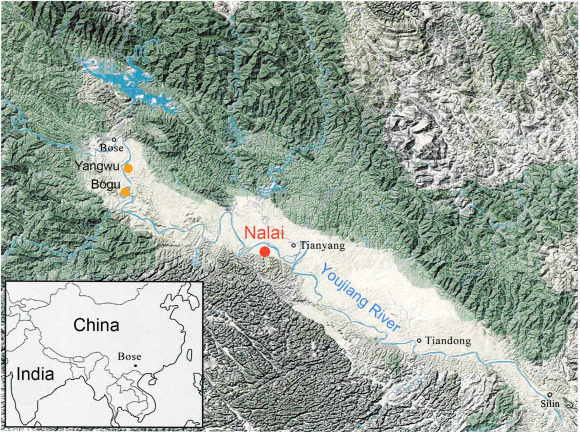
The recently discovered Nalai site is one of the Bose Basin localities, which is key to studying the earliest bifaces in China. The Nalai site has yielded an abundance of lithic artifacts, including bifaces and tektites in close association. The total fusion 40Ar/39Ar method was applied to four tektites discovered beside and contemporaneous with bifaces in the red laterite sediments of the upper levels of the T4 terrace (layers 4 and 5). Our 40Ar/39Ar data with a weighted mean age of 809 ± 12 ka provide for the first time unequivocal dates for bifacial production at Bose, broadly consistent with the precise Australasian tektite age of 788.1 ± 2.8 ka, recently published by other investigators. The relatively important errors reported here suggest sample contamination by clasts or bubbles for the oldest aliquots and alteration for the younger ones. The lithic assemblage from layers 4 and 5 of the Nalai site is quite similar to that found at other sites in the Bose Basin. The assemblages are dominated by choppers, but bifaces, picks, and unifaces give a Mode 2 and Acheulean-type character to the series. The high frequency of the round tongue-shaped tip, a low elongation index, and a wide and thick base characterize the Large Cutting Tools. These results contribute to resolving ongoing debates on the timing and origin of bifaces and the Acheulean in China.
Revue | Les images dans les images – Antiquité et Moyen Âge, Images re-vues – Hors-série 9 | 2020
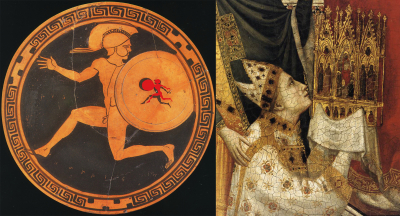
Entièrement consacré aux images dans les images de l’Antiquité grecque et romaine et du Moyen Âge, ce dossier, co-dirigé par Giulia Puma (CEPAM) et Stéphanie Wyler (ANHIMA), comble un manque dans le champ de l’enchâssement et de la mise en abyme figurative. L’étude conjointe des périodes antique et médiévale permet de démontrer la permanence du recours aux effets réflexifs d’une part, mais aussi leur remarquable variété d’autre part. L’Introduction expose les temps forts historiographiques de la recherche sur les images dans les images – d’André Chastel à Victor Stoichita, en souligne les apports existants tout comme les domaines qui n’ont pas fait jusqu’ici l’objet d’un traitement approfondi. On présente ensuite les enjeux essentiels de définitions posés par les images dans les images, les concepts et les catégories (image dans l’image, méta-image, enchâssement, mise en abyme, capacité réflexive, motif réflexif) qui permettent de les qualifier et d’en démontrer le fonctionnement. Le dossier se compose d’une Introduction générale (Giulia Puma) et de huit articles dont les auteures sont spécialistes des images dans l’Antiquité grecque (Françoise Frontisi-Ducroux, Nikolina Kei, Vasso Zachari), l’Antiquité romaine (Valérie Huet, Stéphanie Wyler) et au Moyen Âge (Pauline Duclos-Grenet, Angélique Ferrand, Véronique Rouchon Mouilleron).
Article | L’évolution du couvert forestier et son exploitation mésolithique et néolithique à La Font-aux-Pigeons (Châteauneuf-les-Martigues, Bouches-du-Rhône) : apports de l’anthracologie

Janet Battentier, Stéphanie Thiébault, Didier Binder, Jean Courtin, Ingrid Sénépart, Laurent Bouby, Isabelle Théry-Parisot et Claire Delhon, « L’évolution du couvert forestier et son exploitation mésolithique et néolithique à La Font-aux-Pigeons (Châteauneuf-les-Martigues, Bouches-du-Rhône) : apports de l’anthracologie », Quaternaire [En ligne], 31/4 | 2020, mis en ligne le 01 janvier 2021, consulté le 02 février 2021. URL : http://journals.openedition.org/quaternaire/14308 ; DOI : https://doi.org/10.4000/quaternaire.14308
L’abri de La Font-aux-Pigeons (Châteauneuf-les-Martigues, Bouches-du-Rhône), dans le massif littoral de la Nerthe (273 m), a été occupé entre ca 6450 et 4700 ans cal BCE, par les chasseurs-cueilleurs du Castelnovien et les agriculteurs du Cardial et du « Postcardial ». Au Mésolithique, la perduration d’une ambiance végétale steppique (genévriers, filaires et/ou nerprun alaterne) semble liée à des vents et une sécheresse plus marqués qu’ailleurs dans le Midi. À partir du Cardial, des formations à pin d’Alep et des garrigues dominées par les filaires et/ou le nerprun alaterne évoquent un paysage végétal pré-forestier. La déclinaison du réchauf- fement climatique postglaciaire dans un contexte local particulièrement sec peut expliquer la prédominance du pin d’Alep à partir du Cardial. En outre, le substrat et la pente semblent bloquer la dynamique de végétation à un stade pré-forestier à pin d’Alep. Au cours de l’optimum climatique atlantique cette dynamique de paysages est originale par rapport au reste du Midi de la France où les forêts à chênes caducifoliés dominent. Au cours du Cardial et surtout au début du Postcardial, une modeste pression anthropique pourrait être à l’origine du maintien des garrigues aux côtés des pinèdes. En documentant le couvert végétal avant le plein développement des activités agro-pastorales, cette étude anthracologique permet de mieux comprendre le statut du pin d’Alep dans la dynamique de végétation dans cette zone où les contraintes naturelles sont particulièrement importantes et les perturbations anthropiques anciennes. Les pinèdes constituent ici le stade le plus forestier de la succession végétale, et probablement le climax local. Cette étude souligne le caractère singulier de l’environnement littoral de Provence occidentale au cours de l’Holocène ancien et moyen ; proche des refuges glaciaires, il se distingue par une installation précoce de taxons thermophiles et se trouve soumis à des contraintes naturelles impor- tantes avant même que l’impact anthropique ne se fasse pleinement ressentir.
Article | Premiers pasteurs-potiers de l’Afar
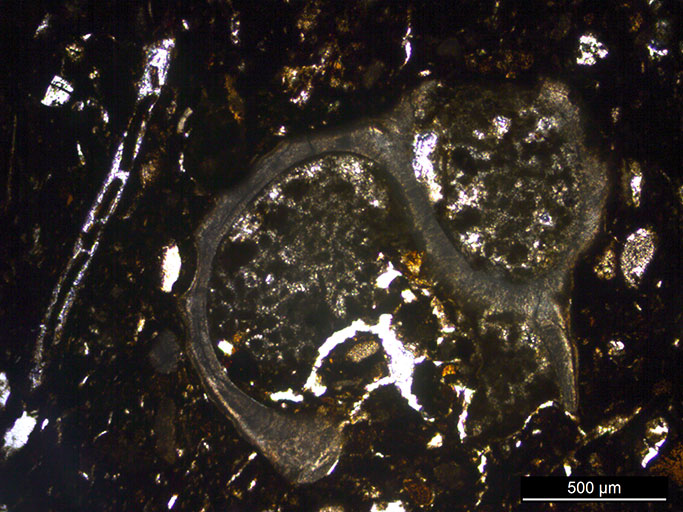
Le projet de recherche « Réseaux sociaux dans la Corne de l’Afrique au temps des premiers pasteurs-potiers : une étude de l’origine des pâtes des céramiques imprimées de l’Afar » s’est déroulé à Addis-Abeba (Ethiopie) pendant un séjour de deux mois et demi entre octobre et décembre 2019, grâce au financement d’une bourse de mobilité postdoctorale du programme Atlas 2019 de la Fondation Maison des Sciences de l’Homme (FMSH) et du Centre français des études éthiopiennes (CFEE). Ce projet a permis l’étude des matériaux céramiques néolithiques et post-néolithiques collectés lors des missions 2014-2019 du projet « VAPOR-Afar: Volcanological and Archaeological Program for Obsidian Research-Afar » (dir. L. Khalidi).
Article : https://cfee.hypotheses.org/7638
Ouvrage | Églises médiévales des Alpes-Maritimes
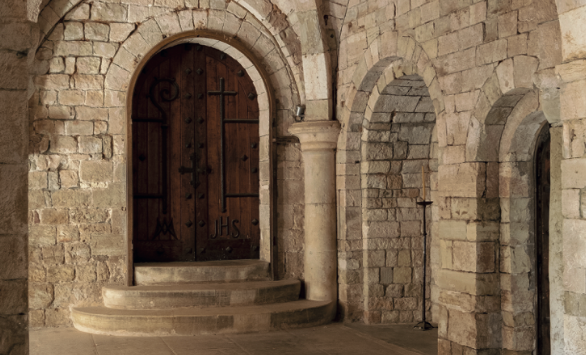
Savamment évoqué par Jacques Thirion dans son ouvrage Alpes romanes paru il y a quarante ans, et réexaminé depuis lors d’études monographiques ou à l’occasion du congrès de la Société française d’archéologie en 2010, le patrimoine religieux médiéval méritait que l’on aille plus loin, en posant sur lui un regard nouveau. Pour cette publication, il ne fut pas chose facile de déterminer les édifices qui allaient être évoqués. Chaque bâtiment, chaque ruine avait son sens et son histoire. Des choix ont été effectués cependant : certains édifices s’imposaient, d’autres ont été retenus pour la forte empreinte médiévale qu’ils pouvaient encore porter.
En ouverture de l’ouvrage, une présentation générale des monuments chrétiens de l’Antiquité tardive et du Haut Moyen Âge a paru nécessaire, tant le semis de lieux de culte, qui s’est mis en place par strates successives du Ve au Xe siècle, a influé sur la construction du paysage monumental roman. Ce tableau d’une christianisation qui irrigue largement le territoire et qui se poursuit, malgré l’instabilité politique, avec la période carolingienne, nous conduit au début du XIesiècle, lorsque s’amorce, grâce à l’action de certains acteurs, évêques, ordres monastiques, seigneurs, un vaste mouvement de construction qualifié d’ « architecture romane ».
Ainsi le premier âge roman apparaît-il comme un temps de réorganisation où des forces structurantes sont à l’œuvre, notamment celle du clergé régulier. Cette vague de construction fait naître des édifices qui se distinguent selon leur plan, la présence d’une crypte, la qualité technique et esthétique de l’appareil, son décor et parfois sa polychromie.
Simplicité et austérité sont ensuite les maîtres-mots du second âge roman dont les chantiers se prolongent, bien plus qu’ailleurs, jusque dans la seconde moitié du XIIIe siècle. Toute son élégance tient au talent des artisans et à leur maîtrise de l’outillage pour produire des parements homogènes et harmonieux, caractéristiques de cette période. C’est dans cet art maîtrisé de la taille que s’inscrivent les constructions de Valbonne ou de Grasse. Le corpus démontre également les liens qui s’établissent avec des formules architecturales adoptées dans le nord de l’Italie, le Languedoc et au-delà, la Catalogne.
Une fois le cadre posé, les auteurs se sont attachés à reprendre, pour chaque édifice, l’examen des sources historiques et à fonder leurs nouvelles interprétations sur des observations de terrain. Chaque monographie évoque les sources écrites, réalise une description archéologique du bâtiment, en souligne les évolutions afin d’en proposer, in fine, la datation. Dans de nombreux dossiers, les connaissances ont été affinées par de nouvelles analyses ; la chapelle Saint-Sauveur sur l’île Saint-Honorat est ainsi mieux comprise grâce aux fouilles menées par Yann Codou, l’église Saint-Gervais de Sospel ou l’église Saint-Véran d’Ascros sont redécouvertes à la faveur des analyses de Catherine Poteur, la cathédrale de Vence s’impose comme un modèle dans les chantiers innovants du premier âge roman.
L’ouvrage renouvelle les connaissances scientifiques sur cette architecture dont on conserve des exemples exceptionnels et qui font des Alpes-Maritimes un haut lieu des origines de l’art roman.
Sylvie de Galléani
Conservateur-en-chef
Service du Patrimoine culturel
Sommaire_Eglises_medievales_des_Alpes_Maritimes
Article | Management systems of adhesive materials throughout the Neolithic in the North-West Mediterranean
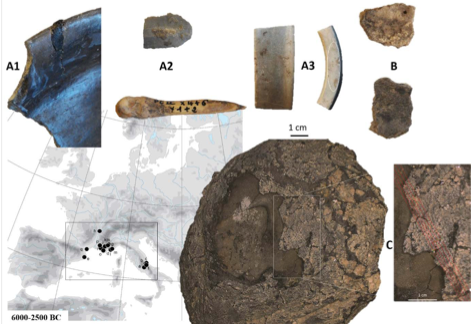
Plant resins, tars and organic fossil substances provide valuable insights into the ecological, environmental and cultural contexts of ancient societies. Their study offers evidence of past know-how, production systems, socio-economic networks and mobility. In this paper, we present new data from 16 sites located in the North-West Mediterranean that provide new insights into the exploitation of these substances for their adhesive and hydrophobic properties throughout the Neolithic (6000-2500 cal BCE). The substances investigated are discussed in the light of their molecular composition, their uses and manufacturing processes. Spatial analyses were also performed to elucidate raw material procurement strategies.
This study considerably increases the body of data available from the Mediterranean and tells a diachronic story of adhesive production and use throughout the Neolithic, highlighting the variability and complexity of production systems and supply networks at different spatial scales. While most adhesive and hydrophobic substances were probably collected locally, birch bark tar was very likely transported across long distances to reach Mediterranean coastal sites. Birch bark tar exploitation intensified in South-Eastern France during the Middle Neolithic, while the Late Neolithic is characterised by a diversification of the substances employed and their range of uses: bitumen, birch bark tar (pure or mixed with Pinaceae resin, beeswax and possibly fat/oil) were important materials that were used for a variety of purposes. Pure Pinaceae exudates were exclusively employed for waterproofing pottery. We also highlight the standardisation of birch bark tar production for adhesive manufacture observed in Provence during the first part of the 4th millennium cal. BCE.
PDF HAL : https://halshs.archives-ouvertes.fr/halshs-03094770/document
Article | A Neolithic without dairy? Chemical evidence from the content of ceramics from the Pendimoun rockshelter (Castellar, France, 5750-5150 BCE)
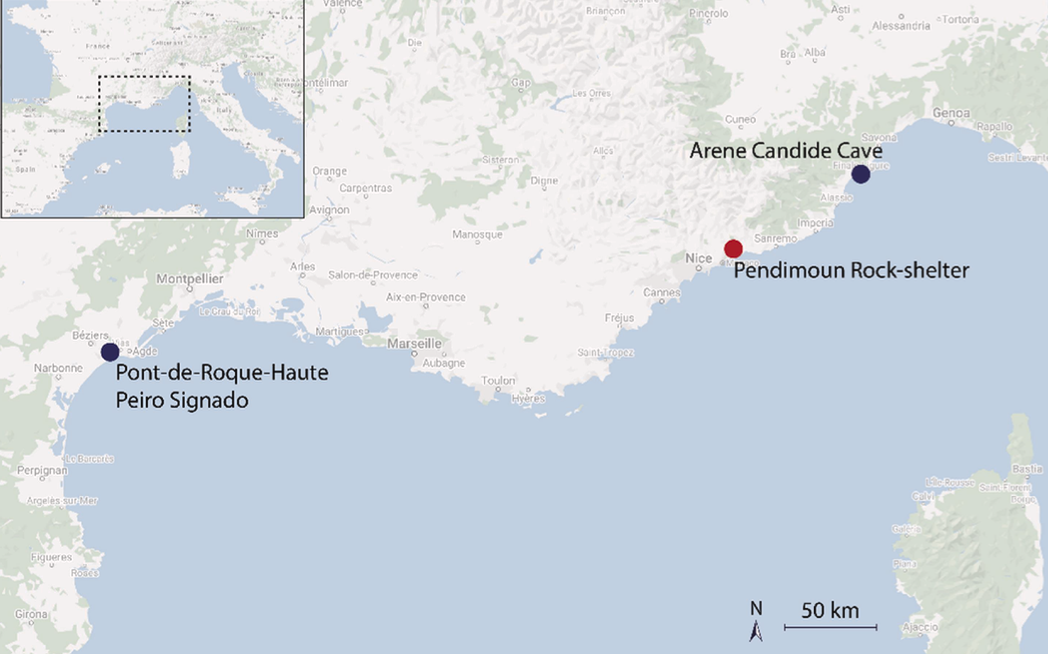
The early phases of Neolithic expansion in the Central and Western Mediterranean are relatively poorly understood with regards to the diversity in the subsistence economy and the degree of interaction with indigenous hunter-gatherers. Recent analysis of pottery manufacturing techniques also points to a surprisingly diverse range of practices across the region. Here, we explore the use of pottery during the early phases of the Neolithic in the Northwestern Mediterranean, through analysis of organic residues absorbed in the pots of the Pendimoun rock-shelter (Impresso-Cardial complex) in Southeastern France. Using molecular and single-compounds stable carbon isotopes analyses, our study reveals that the majority of pots were used for processing wild or domesticated ruminant carcase fats, although lipids derived from cereals and wild non-ruminant fats, such as hares, cannot be excluded. In addition, a few of the earlier Impressa vessels showed the presence of beeswax and porcine fats. Correlations between the contents of the vessels and their volume were found, suggesting that vessels were manufactured for specific uses. Only one vessel from the Cardial phase showed evidence of dairy fats strengthening the notion that milk was not heavily or systematically exploited by the earliest Neolithic populations of the Mediterranean. Overall, however, our study calls for more detailed regional investigations to fully understand the transition to farming according to the local landscape and environmental context.
PDF HAL : https://halshs.archives-ouvertes.fr/halshs-03041190/document
EDITEUR : https://www.sciencedirect.com/science/article/pii/S2352409X20304739?via%3Dihub
Article | Neanderthal foraging in freshwater ecosystems: A reappraisal of the Middle Paleolithic archaeological fish record from continental Western Europe
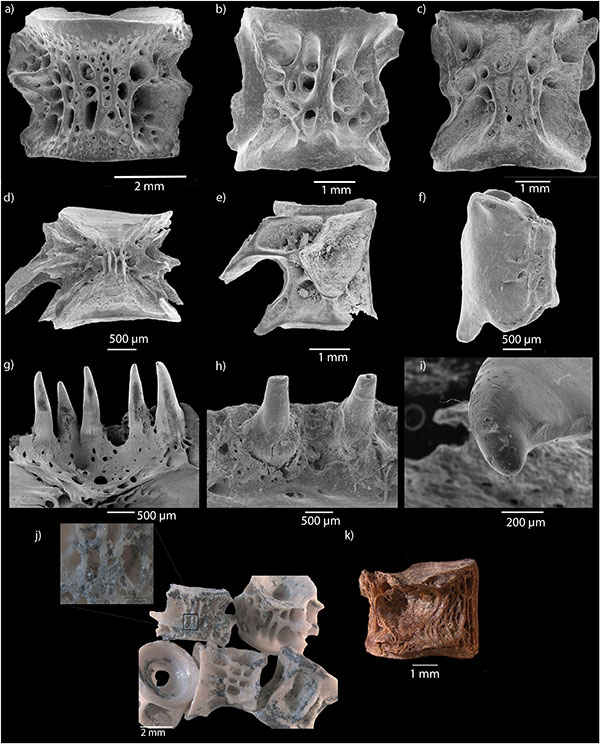
Emilie Guillaud, Philippe Béarez, Camille Daujeard, Alban Defleur, Emmanuel Desclaux, Eufrasia Rosello-Izquierdo, Arturo Moraes-Muniz, Marie-Hélène Moncel. Neanderthal foraging in freshwater ecosystems: A reappraisal of the Middle Paleolithic archaeological fish record from continental Western Europe. Quaternary Science Reviews, Elsevier, 2020, pp.106731. (10.1016/j.quascirev.2020.106731). (hal-03070896)
The prevalence of large game found in association with Middle Paleolithic tools has traditionally biased our ideas of Neanderthal subsistence practices. Studies document the exploitation of small mammals, birds, and plants by Neanderthals, whereas data on aquatic resources are still scarce and data on fish are almost non-existent. This article presents a review of fish remains from 11 Middle Palaeolithic fish bone assemblages from well contextualized sites in Belgium, France and Spain. It explores the nature of the evidence in order to determine whether Neanderthal fished and if so, whether fishing was a casual, opportunistic activity or a systematic practice. The first issue to address is whether archaeological fish remains at any given site represent human activity or not. Our study tests that assertion while enhancing our understanding of the diversity of food alternatives available to Neanderthals at any given site, and their ability to adapt to them. Methodological protocols include quantification, body mass and length estimations, and, whenever possible, spatial distribution of fish remains, taphonomic analyses and inference of the season of death. This methodology constitutes an analytical protocol to assess the contribution of fish to the human diet during the Paleolithic and set apart human-generated fish deposits from those generated by alternative fish accumulators. The evidence gathered so far points essentially to circumstantial fishing by Neanderthals, and the question must necessarily remain open for the moment. Nevertheless, some of the evidence, in particular the presence of large (>1 kg) fish in anthropogenic deposits and the absence of animal digestive traces and gnawing marks on fish bones in such deposits, seems compelling and suggests that Neanderthals could have played a role in the accumulation of some of these remains.
Article | Lipid residues in pottery from the Indus Civilisation in northwest India
Article : https://doi.org/10.1016/j.jas.2020.105291
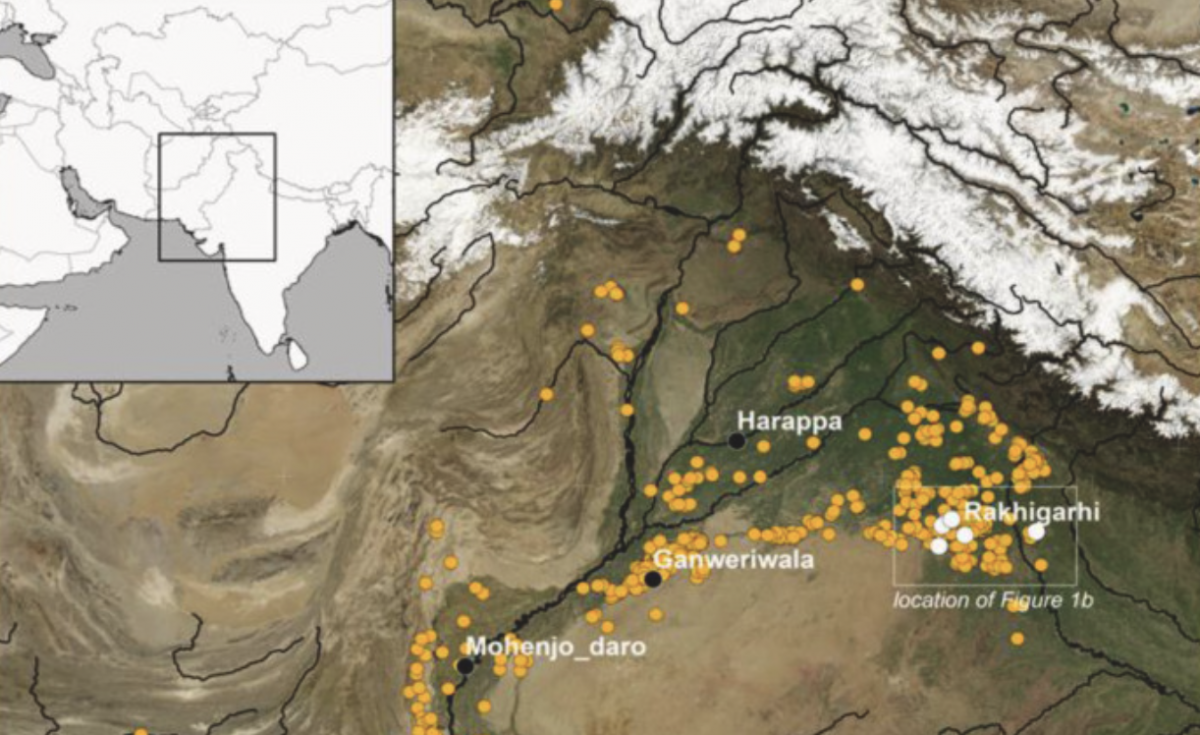
This paper presents novel insights into the archaeology of food in ancient South Asia by using lipid residue analysis to investigate what kinds of foodstuffs were used in ceramic vessels by populations of the Indus Civilisation in northwest India. It examines how vessels were used in urban and rural Indus settlements during the Mature Harappan period (c.2600/2500–1900 BC), the relationship between vessels and the products within them, and identifies whether changes in vessel use occurred from the Mature Harappan to Late Harappan periods, particularly during climatic instability after 4.2 ka BP (c.2100 BC). Despite low lipid concentrations, which highlight challenges with conducting residue analysis in arid, seasonally-wet and alkaline environments, 71% of the vessels yielded appreciable quantities of lipid. Lipid profiles revealed the use of animal fats in vessels, and contradictory to faunal evidence, a dominance of non-ruminant fats, with limited evidence of dairy processing. The absence of local modern reference fats makes this dataset challenging to interpret, and it is possible that plant products or mixtures of plant and animal products have led to ambiguous fatty acid-specific isotopic values. At the same time, it appears that urban and rural populations processed similar types of products in vessels, with limited evidence for change in vessel use from the urban to the post-urban period. This study is a systematic investigation into pot lipid residues from multiple sites, demonstrating the potential of the method for examining ancient Indus foodways and the need for the development of further research in ancient organic residues in South Asia.