
Source : https://doi.org/10.1016/j.jas.2026.106593
Despite the development of organic residue analysis in ceramics vessels, the continental European Atlantic coast remains underrepresented although preventive archaeology has revealed numerous sites in this region over the past two decades. The Late Neolithic site of ‘Les Calti` eres’, distinguished by its multiple ditched enclosures, preserved faunal and shell remains, and substantial ceramic assemblage, was investigated to begin to fill this gap. Thirty-five reconstituted vessels and 28 isolated sherds were analysed using molecular and isotopic methods to study lipid preservation and ancient subsistence strategies, and to contribute to the debate on the site’s status. The study revealed an excellent conservation of the lipids and the extensive use of ceramic vessels for various purposes, including food cooking, dairy processing, storing low-lipid commodities, salt production, serving and consuming food. Analysis showed that culinary practices mainly involved ruminant carcass fats and dairy products, with notable contributions from plant waxes, possibly from leaves and fruits, while no aquatic product was documented either from lipids or from faunal remains. Interestingly, the combination of data on lipids and faunal remains highlighted the on-site animal husbandry cycle, from feeding and milking to slaughtering, butchering, preparing and consuming in pottery. This work sheds new light on ceramic use and land exploitation, and contributes to ongoing debates about the function of ditched enclosures, supporting a domestic use of the site. It also opens new avenues to discuss the evolution of foodways at the end of the Prehistory at the scale of the European Atlantic coast.
A lire aussi
Exposition | Écrire la ville : 850 ans d’archives et de mémoire urbaine
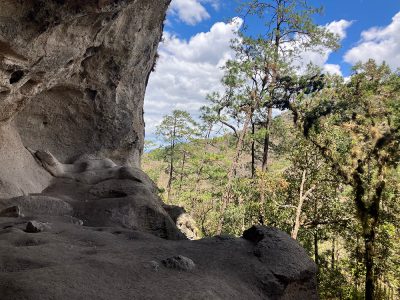
Article | Archaeological charcoals from El Gigante Rockshelter, Honduras, reveal the 10,000 year-long postglacial ecological dynamics of the Central American pine–oak forest