

Source : https://doi.org/10.1016/j.jasrep.2025.105014
Arbutus unedo L. is very abundant in pre- and protohistoric anthracological assemblages of Corsica (north-western Mediterranean). In the present day, it is a dominant species, along with Erica arborea L., of the macchia, a shrubland ecosystem that covers a major part of the island. The current state of the macchia is characterised by a low and more or less dense shrubby stage, maintained by frequent disturbances. However, rare preserved plots demonstrate the capacity of Arbutus unedo to evolve into a tree up to 10 m high, forming high, nearly forested macchia.
A traditional anthracological approach documents the floristic composition of past woodland but it does not allow us to specify the growth habit of the trees. Consequently, the physiognomy and structure of the Holocene Ericaceae formations remain unknown, despite their abundance in the landscape and their potential for exploitation in pre- and protohistoric human activities. To address this issue, we have developed a quantitative eco-anatomical approach for the characterisation of size patterns of Arbutus unedo. This method is based on the measurement and quantification of wood structural and vascular elements whose abundance and size are influenced by natural or anthropogenic ecological parameters. Modern wood samples are used to build a predictive model that can be applied to archaeological specimens.
Results from statistical analyses indicate that tree height and branch size are recorded by eco-anatomical features. Moreover, it has been shown that tree height is correlated with anatomical features such as ray size and vessel density. Applied to archaeological samples of Arbutus, the eco-anatomical analysis highlights the presence of tall Arbutustrees during the early Neolithic period, while low macchia appears to be the dominant vegetation type during the Bronze and Iron Ages. These results confirm hypotheses previously formulated from pollen and charcoal data and provide further insight into the impact of human activities on the landscapes.
A lire aussi
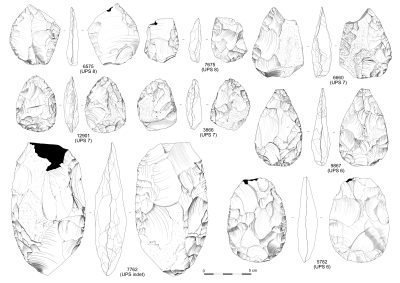
Article | Juste pour la forme ? Approche comparative des pièces façonnées du site Paléolithique moyen du Plateau de Voisins à Mouroux (Seine-et-Marne)
Audrey Vincent-Pennec, Erwan Vaissié, Sylvain Soriano, Juliette Guibert-Cardin, Mathieu Rué et Alexis Taylor, Gallia Préhistoire [En ligne], 66 | 2026
Dossier Revue | Programme EPISPAT. Hiérarchie sociale et développement territorial en Gaule Narbonnaise et dans les provinces voisines : enquêtes au croisement de l’épigraphie et de l’archéologie spatiales
Coordonné par Marie-Jeanne OURIACHI et Christophe PELLECUER, RAN, 58, 2025
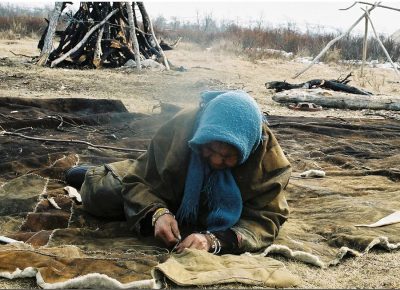
Dans la peau de mon renne. Travail de la peau dans les sociétés traditionnelles
CONFÉRENCE ET PROJECTION, par Sylvie BEYRIES, Directrice de recherche émérite, CNRS. 03/10/2026, MUSÉE ARCHÉOLOGIQUE D'ARGENTOMAGUS, Saint-Marcel, Indre.