
Source : https://doi.org/10.1016/j.quascirev.2025.109708
Despite the central role of fire in Pleistocene and Palaeolithic lifeways, the relationship among hominins, fire, and their environment remains unclear. Ancient combustion residues hold a wealth of molecular data that may help to resolve some of these questions, yet standardised guidelines for reconstructing past fire traces are notably lacking. In this study, we examine extensive combustion residues overlying Middle Palaeolithic deposits from the open-air site of Ormesson (France). To determine whether the combustion residues are of natural or human origin, multiproxy approaches including anthracology, lipid biomarker, and benzene polycarboxylic acid (BPCA) analyses are applied. These techniques are used to characterise organic matter and pyrogenic carbon compositions in the deposits, providing insights into surrounding vegetation, palaeoenvironmental shifts, and the production parameters involved in the formation of the char assemblage. Lipid biomarker evidence suggests that the pre-fire local environment featured abundant coniferous vegetation (e.g., Pinaceae taxa), which is supported by anthracological evidence for a predominance of Pinus cf. sylvestris/nigracomplemented by Betula sp. taxa. The post-fire environment saw a contraction of coniferous vegetation, concurrent with an expansion of deciduous taxa, grasses and herbaceous material. The combustion event, which resulted in 67 % of the charcoal assemblage exhibiting vitrification, produced PyC contents of up to 362 g/kg OC in soil samples and 443 g/kg OC in charcoal samples, with aromatic condensation values of up to 34 %. BPCA-derived predictions of heat treatment temperatures yielded values of approximately 300–400 °C for charcoal samples and 400–550 °C for soil samples in the burned layer, constituting the first instance in which quantitative temperature estimations are obtained from BPCA results. Based on the integrated evidence, we accept the null hypothesis that the studied combustion residues are natural in origin. However, the similarity of archaeometric and geochemical signatures from natural and human-controlled fires underscores the need for interdisciplinary, multiproxy efforts to improve the identification of past fire regimes.
A lire aussi
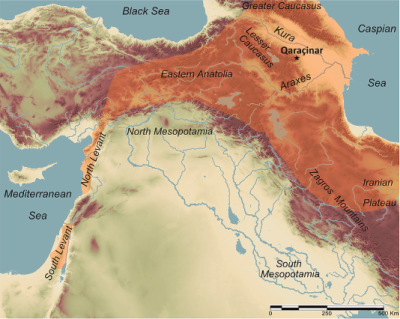
Article | Biomolecular analyses reveal grape-based beverages, dairy processing, and pottery function in Kura–Araxes culinary practices
Billet de blog | Rejibah (Southern Iraq): A city at the dawn of Mesopotamian urbanisation